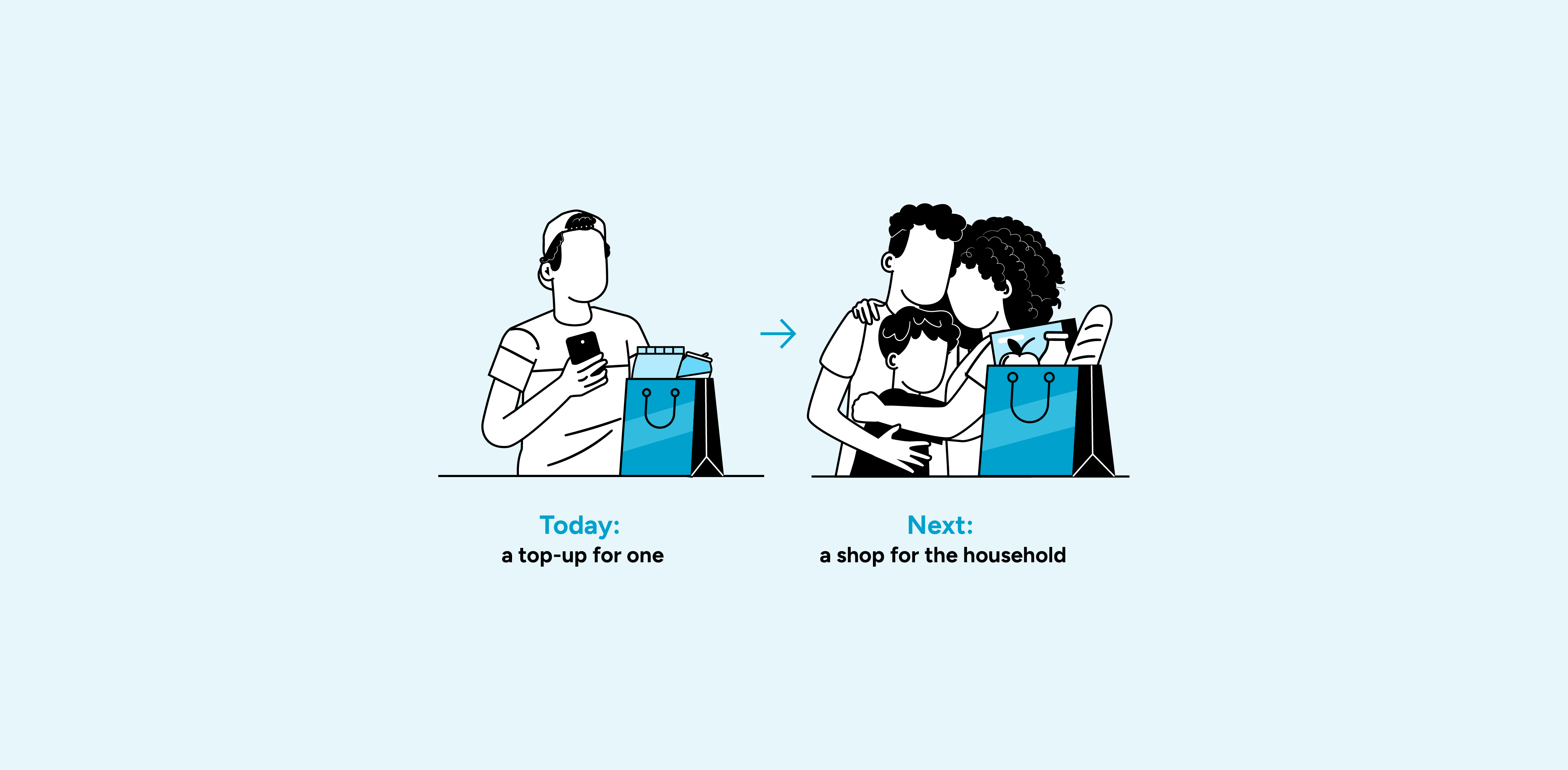
Quick commerce's heaviest users are in their twenties and thirties. Over the next few years many of them will start running households, and the evidence suggests that changes how people shop. Range and content plans built around today's shopper may need to follow them.
The shopper most plans were built around
When IGD first sized UK quick commerce in 2021, it’s research showed the average age of a QCom shopper was 36, most often a young adult living in a city. The main missions were food to go, a top-up, or a meal for tonight.
As such most channel plans were built on that picture. The categories bought most often in quick commerce are still soft drinks, impulse items and bakery.
The picture is still recognisable. But it's also incomplete.
What the 2026 data shows
IGD surveyed 2,000 UK shoppers in the first quarter of 2026. Almost half of 18 to 24 year olds (49%) had used quick commerce in the previous four weeks, compared with 5% of over-65s. Across all shoppers, four-week use rose from 19% in November 2024 to 22% in March 2026.
Growth is being driven by higher-income 18 to 44 year olds, a much wider group than students and first-jobbers. And among people who use quick commerce, a third (33%) now order every week, up from 27% at the end of 2024.
This figure applies to people who already use quick commerce. Across the wider population it is much lower. YouGov's survey of 2,591 British adults in March 2026 found that only 3% of those aware of rapid grocery delivery use it weekly. Quick commerce is a frequent habit for a growing minority, concentrated among the under-45s.

YouGov found the most common order value is £20 to £29.99, and 65% of users buy essentials such as milk, bread and eggs - so the basket is still modest. One in ten say they have used rapid delivery for a full weekly shop and 21% of shoppers who order a takeaway through quick commerce add groceries to the same order.
Price is the most important factor in where quick commerce shoppers buy, and the cost of delivery influences choice more than delivery time.
Life stage changes the shop
Many 18 to 24 year olds still live with their parents and aren't responsible for the household's spending. They use quick commerce for a narrower set of shopping occasions and products than someone running a household would. However, that will likely change when they move out, settle with a partner or have children.
IGD's research on generations, published in August 2026, describes Millennials, aged 30 to 45, as shaped more by life stage than by age. Younger Millennials shop much like Gen Z. Older Millennials, who are more likely to be managing a household and children, are more planned and more value-conscious. The younger group wants flexible portions. The older group wants family-sized options and pack sizes it can rely on.
The generations research covers grocery shopping as a whole, with no separate figures for quick commerce. It also compares different age groups at one point in time. We found no public study that follows the same shoppers as they age, so it isn't yet known whether today's heavy users will keep using quick commerce once they are running a household.
Older shoppers have not taken up quick commerce at the same rates. Only 5% of over-65s used it in the past four weeks, and it would probably take more trust and a simpler experience to bring them in.
The under-45s who use quick commerce most are heading into the years when shopping becomes more planned and more value-led. That is an opportunity for suppliers. Shoppers who already have the quick commerce habit could bring larger, more planned baskets to the channel.
Where the journey starts
The same research asked quick commerce shoppers what they decide first when placing an order: which delivery app to use, or which retailer to buy from. Overall, 41% choose the delivery app first and 28% choose the retailer first. Among 18 to 24 year olds, 50% choose the app first. Among 25 to 34 year olds it's 53%.
Older users, those aged 45 to 54 in particular, lean more on the brands and retailers they already trust. The sample here is small (247 quick commerce users), so the age differences are best read as a direction.

Younger shoppers pick the app first, then compare retailers on fees, delivery times and promotions. For a brand, that means many under-35s see the product as it is listed in the delivery app, with the content and price shown there, and may never visit the retailer's own website. So work a brand does on the retailer's site only reaches these shoppers if it carries across to the app listings. It is worth checking that images, descriptions and promotions appear there as intended, and that the product can be found when a shopper searches inside the app.
What this means for range and content
The core quick commerce basket is small and built on essentials, snacks and soft drinks, and that is unlikely to change soon. But a shopper feeding a family at short notice needs a different pack from a shopper buying for one, so it's worth checking that the quick commerce range covers both.
The growth opportunity sits in categories shoppers haven't yet bought through quick commerce but would consider, and non-food categories feature strongly among them.
Retailers have also started to extend member pricing to the delivery apps, which suits a shopper who puts price ahead of speed. Promotions planned for the store or the retailer's website may need a quick commerce version.
For content, if half of the youngest users start in a delivery app, how a product appears there matters at least as much as how it appears on the retailer's own site. We found no independent public research that measures the effect of product content on sales within the delivery apps, so this is our reasoning and it hasn't been measured.
What survey data can't show
Everything above describes the quick commerce shopper in general. Even the most detailed public research rests on a few hundred quick commerce users. It can't show who is buying your products, through which platform, or from which stores. It can't show what those shoppers searched for, or what they bought when your product wasn't available.
That information sits with the retailer. Co-op reported quick commerce sales up 24% in the first half of 2026, with the service now available from 90% of its stores. Co-op Catalyst, a partnership between Co-op and eStoreBrands, will give suppliers access to Co-op's own quick commerce data across coop.co.uk and the delivery platforms Co-op sells through.
Co-op Catalyst opens to suppliers later this year. You can register your interest at https://estorebrands.com/coopcatalyst.
Sources
- IGD, Gen Z pushes quick commerce into mainstream as online grocery fragments, 6 May 2026.
- IGD ShopperVista, How is Gen Z influencing the future of online?, 27 May 2026.
- IGD in Food Manufacture, How to win with shoppers in an evolving online landscape, 21 May 2026.
- IGD Retail Analysis, More than rapid delivery, 22 July 2026 (four-week use; where the journey starts).
- IGD ShopperVista, Millennial mindset: how needs shift with life stage, 25 August 2026.
- YouGov, Rapid grocery delivery in the UK: awareness, usage trends and adoption barriers, 16 March 2026 (2,591 GB adults, 6 to 9 March 2026).
- IGD, quick commerce channel research, June 2021 (average shopper age 36), as reported by FoodVoices.
- IGD Retail Analysis, Quick commerce: latest developments in the UK, 1 July 2025 (member pricing on delivery apps).
- Co-op Group, Interim Results Announcement 2026, 23 September 2026.