


This autumn I spent time at the Connected Commerce Summit in London and at events run by the Digital Shelf Institute (DSI), along with a run of webinars. AI took most of the airtime. Speaker after speaker talked about agents, answer engines and the shopper's new AI assistant, and that conversation is moving quickly.
The sessions with the most useful numbers kept returning to something less fashionable. The brands growing fastest online get the basics right. They stay in stock, keep their pages complete, spend media where it creates new sales and carry one idea through every channel, and they keep doing it while the rules change around them.
Five basics came up again and again: fix the digital shelf first, make retail media earn its place, execute one idea everywhere, win the moment of choice, and build an organisation that treats online as the default. None of them needs an AI strategy to get started, and each of them makes an AI strategy work better.
Table of Contents
- Fix the digital shelf first
- Make retail media earn its place
- Execute one idea everywhere
- Win the moment of choice
- Build the organisation for online
- Seeing problems before the shopper does
- The basics are what the machines will read
1. Fix the digital shelf first
Karo Healthcare shared one of the most practical numbers I heard: a single out-of-stock costs a product six to seven days of search rank. The shopper who can't buy today is lost, and so is the visibility that would have won the next one. Availability belongs on the search dashboard as much as in the supply chain report.
Karo's response was to make the shelf simple to get right. Its framework (Easy to Find, Easy to Choose, Easy to Work With) sets one product page standard centrally: a hero image, four secondary images and a video. Local markets then put it live.
Reviews get the same discipline, because shoppers discount old ones. In a PowerReviews survey of more than 3,000 UK shoppers, 56% said they would consider a different product if its only reviews were a year old or more. A page can be complete and still look stale.
DSI made the same point as a ladder. Before extra content, enhanced attributes or optimisation, a brand needs working infrastructure, pages that retailers and search engines can read, basic product content and correct variations. Skip a rung and the work above it won't hold.
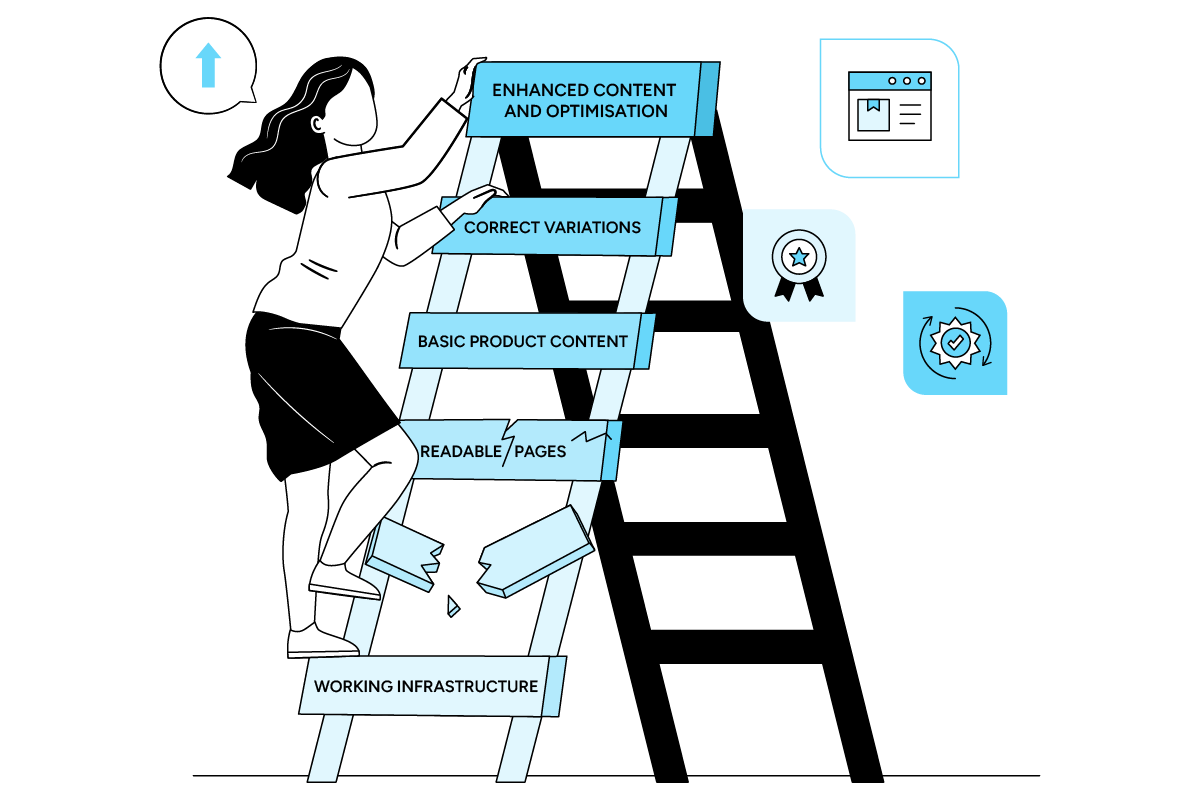
The ladder keeps moving, too. DSI noted that Amazon changed its content requirements more than 200 times in 2024. In the EU, Digital Product Passports are on the way, starting with categories such as batteries, textiles and furniture. Keeping the basics right is a standing operation, and brands need to know when something breaks before the shopper does.
2. Make retail media earn its place
The Advertising Association and WARC forecast UK retail media to grow by around 15% in 2026, to more than £4 billion. Few speakers disputed the growth. What they questioned was what the money buys. KHWS pointed to a supplier's description, reported in The Grocer, of retail media as a "dressed-up listing fee", and ProductWind put it more bluntly: more spend does not mean more category share.
The brands with good answers measured something other than clicks. Karo found that running display alongside sponsored products lifted return on ad spend by 59%. It also found that one in five shoppers who clicked a paid search ad went on to buy in store, a sale that online-only reporting would never credit.
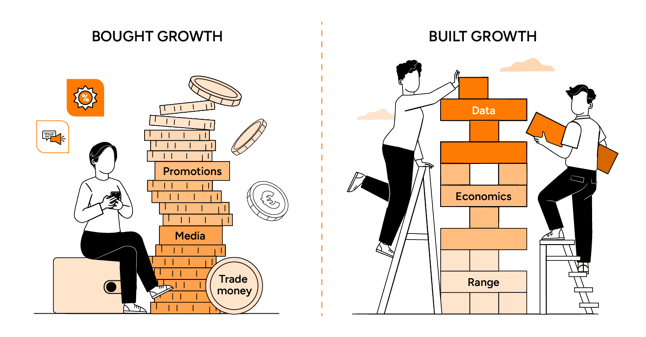
A joint study by Consulterce and DSI gave the problem a sharper name: bought growth versus built growth. Bought growth comes from media, promotions and trade money, and deep discounts amplified with retail media can create tension with other channels. Built growth comes from a range, economics and data designed for the channel, and it survives the next negotiation. As one leader in the study put it: "It is not about getting more money. It is about how far your money goes."
3. Execute one idea everywhere
Jo Hollins, marketing and category director at BIC, summed up her approach as "One strategy, one idea, connected execution." The BIC Cristal campaign carried one creative idea from social and TV through to retailers and in-store displays. It reached 17 million people, scored 22 to 26 points above benchmark on campaign recognition and delivered three times the planned video views.
The commercial result followed. In a writing and colouring market that fell 2.1% year to date, BIC Cristal grew value sales by 2.8% and gained 1.1 points of value share. Hollins's case was that five elements, each adding 3 to 6% on its own, delivered around 25% when they were optimised together.
CELSIUS showed the same thing from the other end of the scale. It entered a £2 billion UK energy drinks category in which two brands hold 89%, and Carlotta Cattelani, head of marketing for the UK and Ireland, said the brand "had to create demand before we had the scale to capture it". CELSIUS maps growth in four stages (culture, trial, availability and habit), and demand leaks away in the handovers between them, which often have no clear owner. A sample is wasted if the shopper can't find a chilled can within reach the following week.
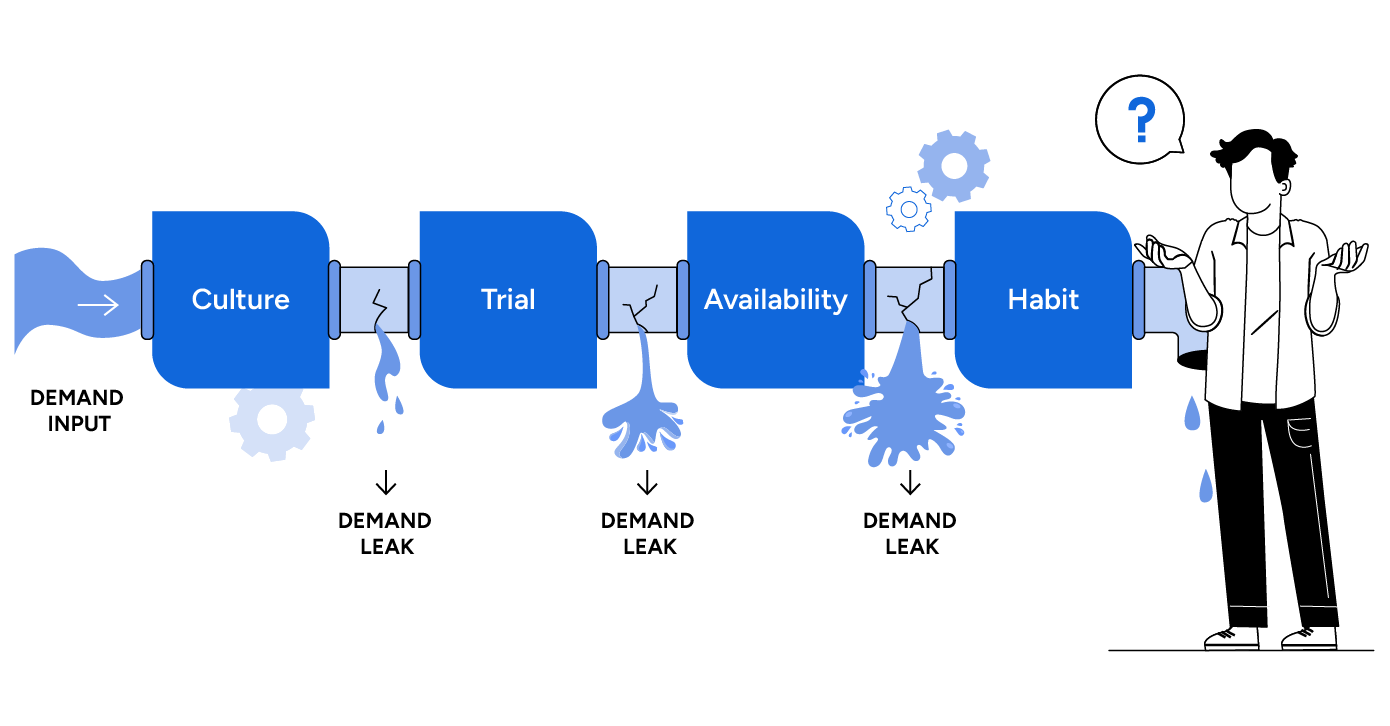
So CELSIUS planned the handovers. Sampling reached more than half a million people, with coupons redeemed at 35% against a typical 20%. Its creator network grew from 100 to 3,000, paid in product only. One joined-up plan around the British Grand Prix at Silverstone delivered a 135% increase in store cases.
4. Win the moment of choice
Diageo's Efrain Rosario built his session around the shopper's moment of choice, whether that comes on a shelf, in a search bar or on a phone at 9pm. His prescription was to own the brand's response there, with occasion-led merchandising, retail media connected to it and in-store theatre that gives shoppers a reason to stop. Henkel's Eve Kolesova added a useful filter for anything new at that moment: consumers buy outcomes rather than innovation.
Online, the moment is narrower than many brands assume. KHWS, working with Durham University, shared eye-tracking on Tesco.com showing that the search bar dominates where shoppers look, and distilled 120 behavioural heuristics into nine "sales triggers" that brands can design for. Dragonfly AI showed how much the pack still matters. Making range variants distinct, while keeping them clearly one brand, lifted one pack's share of attention from 58% to 87%.
The moment is also moving to smaller screens. IGD forecasts UK quick commerce to grow by around 11% a year to reach £5.5 billion by 2031. Tesco went live on Uber Eats in August, with Deliveroo announced to follow, and Mars Snacking described quick commerce as a media channel in its own right. On these apps the shelf is small, the content is thin and availability decides who gets picked. The same basics apply, under more pressure.
5. Build the organisation for online
Martin Heubel of Consulterce and Lauren Livak Gilbert of DSI presented research rather than a case study. They interviewed ecommerce, sales and retail media leaders across multinational consumer goods, consumer health, pet nutrition, spirits and small appliances. One quote set the tone: "Our leadership team wants to double Amazon revenue by 2030. We are terrified."
The findings explained the fear. Leaders rated their organisation's ecommerce readiness at 5.5 out of 10. Senior ecommerce people spend an average of 35% of their time educating leadership instead of facing the customer, and more time spent educating tracked closely with more internal friction, but barely with more readiness. Omnichannel is discussed everywhere, yet in practice it is run mainly by marketing, while product development, finance and supply chain treat online as a bolt-on.
Growth targets were the other gap. They are set as outputs, such as doubling online sales, while the inputs that would deliver them (tools, processes, people and budget) are left undefined.
The study's conclusion was that online growth has to be built, and that means rethinking the range as well as the media plan. Most brands sell their offline range online as it is, with packs designed for the physical shelf and prices set by omnichannel promotions. For Amazon in particular, Consulterce described a range designed for online instead, with packs built around shipping costs, price points set for the channel, and growth from repeat and accessory purchases rather than discounts. Mars made a related point on pricing: by the time CPI figures arrive it is too late, so price from your own three-month trends.
The study proposed three moves:
- Define your inputs. Name one owner for the channel, agree the input measures that lead the growth number, and plan bottom-up so the cost of growth is visible.
- Get sponsorship from the top, ideally from a leader who has run digital commerce, so reviews track progress rather than reopening old debates.
- Mirror the customer. Own the commercial position where the retailer runs its business (pan-European for Amazon, for example), with local activation inside agreed guardrails.
6. Seeing problems before the shopper does
Karo's six-to-seven-day figure is a reminder that an out-of-stock costs more than the day's lost sales. Most of these problems are visible on the shelf before they show up in the sales data, and that is where they are cheapest to fix.
At eStore we monitor availability, content and search position every day across more than 3,000 retailer sites in over 70 markets. An out-of-stock, a missing image or a slipping search position shows up as it happens, rather than weeks later in a sales report.
7. The basics are what the machines will read
With AI, these basics matter more. Every AI shopping assistant discussed at these events works from the same raw material: whether a product is in stock, whether its content is complete and consistent, and whether the brand has earned enough presence to be considered. A brand that can't keep a page right for human shoppers won't be chosen by an agent either. My next piece looks at that AI conversation in more detail.
Key Takeaways
- One out-of-stock can cost about a week of search visibility, on top of the lost sale.
- Content basics come first and need constant upkeep: Amazon alone changed its requirements more than 200 times in 2024.
- Retail media is growing fast, and the brands getting most from it measure new sales and purchase intent rather than clicks.
- One idea carried across every channel compounds, as BIC and CELSIUS both showed.
- Online growth has to be built, with an owner, defined inputs and a range designed for the channel.
Frequently Asked Questions
Why does an out-of-stock affect a product's search rank?
Retailer search tends to favour products that are available and selling. A product that can't be bought stops selling, and its position drops while the shelf is empty. Karo Healthcare found that a single out-of-stock cost a product six to seven days of search rank, so the loss continues after the stock is back.
What are the basics of the digital shelf?
Products in stock, complete and correct product content, current reviews, and pages that retailers and search engines can read. The Digital Shelf Institute describes them as a ladder: working infrastructure, readable pages, basic content and correct variations all come before enhanced content or optimisation.
How can a brand tell whether retail media is creating new sales?
By measuring more than clicks. The brands with good answers looked at new sales and purchase intent, including sales that happen outside the retailer's online reporting. Karo, for example, found that one in five shoppers who clicked a paid search ad went on to buy in store.
What is the difference between bought growth and built growth?
The terms come from a study by Consulterce and the Digital Shelf Institute. Bought growth comes from media, promotions and trade money. Built growth comes from a range, economics and data designed for the online channel, and it holds up through the next retailer negotiation.
Do these basics still matter as AI shopping assistants grow?
Yes, and more than before. AI shopping assistants work from the same information shoppers see: whether a product is in stock, whether its content is complete and consistent, and how much presence the brand has. A product with gaps in any of these is less likely to be recommended.
References and Further Reading
- Marketing Week, "UK ad spend up 9.3% as market set to hit £50bn by year end" - Advertising Association/WARC retail media forecast for 2026
- The Grocer, "Are retail media sales teams just gorillas with calculators?" - the "dressed-up listing fee" comment
- PowerReviews, "The Importance of Review Recency and Volume Among UK Shoppers" - review recency survey of more than 3,000 UK shoppers
- Salsify, "Keep up with retailer requirements" - Amazon content requirement changes in 2024
- IGD, "The £5.5bn opportunity: how quick commerce is being rebuilt" - UK quick commerce forecast to 2031
- Retail Gazette, "Tesco adds Deliveroo and Uber to q-commerce offering" - Tesco's Uber Eats and Deliveroo launch
- SGS, "How will the EU ESPR and DPP impact consumer product markets?" - Digital Product Passport scope and exclusions
- Session material from the Connected Commerce Summit London and Digital Shelf Institute events, 2026: Karo Healthcare, BIC, CELSIUS, Diageo, Henkel, KHWS with Durham University, Dragonfly AI, ProductWind, Mars Snacking, and the Consulterce and DSI study.